Pick a line you would actually play
Start from a curated family or one of your own Lichess studies, then choose the exact variation you want in your repertoire.
Chess opening trainer
Learn what an opening trainer should do, why board-first recall matters, and how ChessEcho helps you memorize lines without turning prep into another schedule to manage.
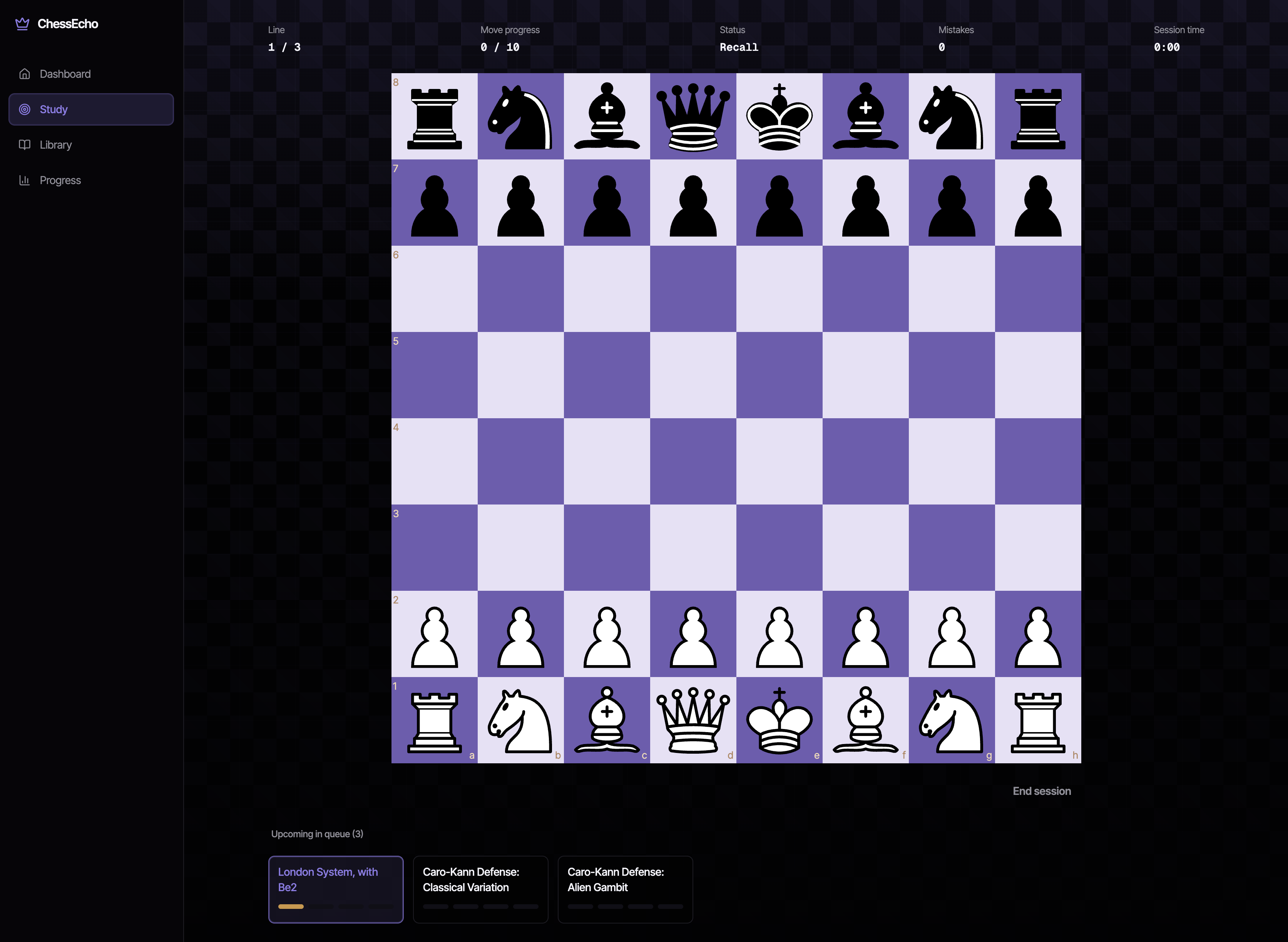
Trainer essentials
Opening knowledge is useful only when you can recognize a position and choose the next move. A trainer should make that recall loop obvious.
It should make the board position the prompt, because games do not ask you to recite move lists.
It should let you choose exact lines, not just broad opening names or isolated flashcards.
It should surface the lines that are ready to review without making you manage a schedule.
It should show which lines are improving, slipping, or still untested.
The workflow
This is the part passive study usually skips: selecting a small line, testing it from the board, and letting ready reviews decide what comes next.
Start from a curated family or one of your own Lichess studies, then choose the exact variation you want in your repertoire.
A good trainer should reduce opening sprawl. Keep the moves you plan to recall, then let them enter the review queue.
Training on a board forces the same memory cue you get in a game: the current position, not a chapter title.
Clean lines move out of the way. Shaky lines come back sooner, without making you manage a schedule.
Method comparison
ChessEcho is not trying to replace analysis, courses, or study notes. It gives the recall step a dedicated home.
Great for storing analysis, weak for forcing active recall.
Turns selected lines into ready reviews you can drill from the board.
Useful for ideas, but watching does not prove you can reproduce the line.
Makes the move order testable after you understand the plan.
Efficient for prompts, but often detached from real board context.
Uses the actual position as the cue, so recall feels closer to a game.
Finds moves, but can bury practical repertoire choices in too many branches.
Keeps the review queue centered on the lines you intend to play.
Inside ChessEcho
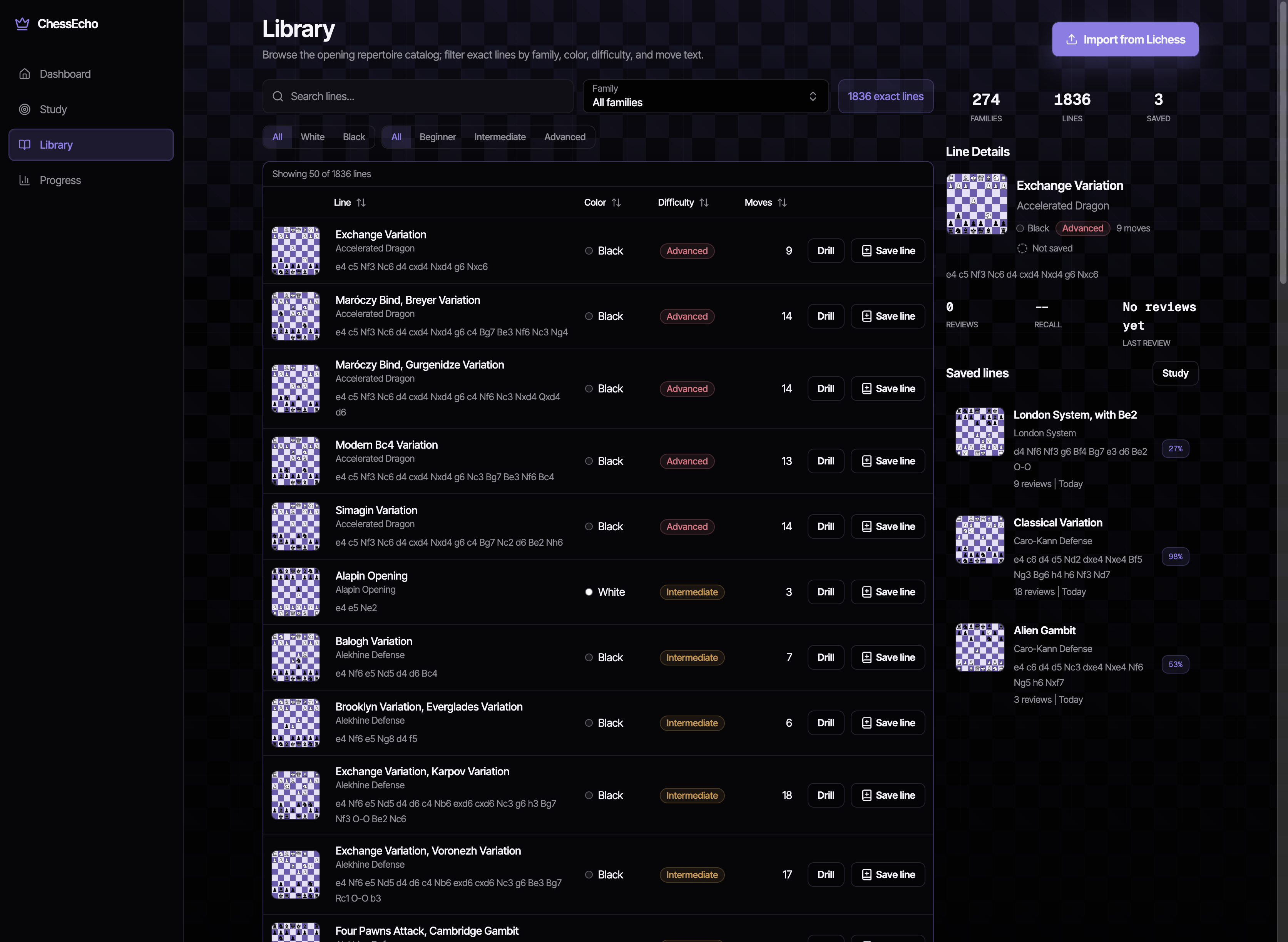
Opening library
Use the curated catalog as your starting point without needing to import a course first.
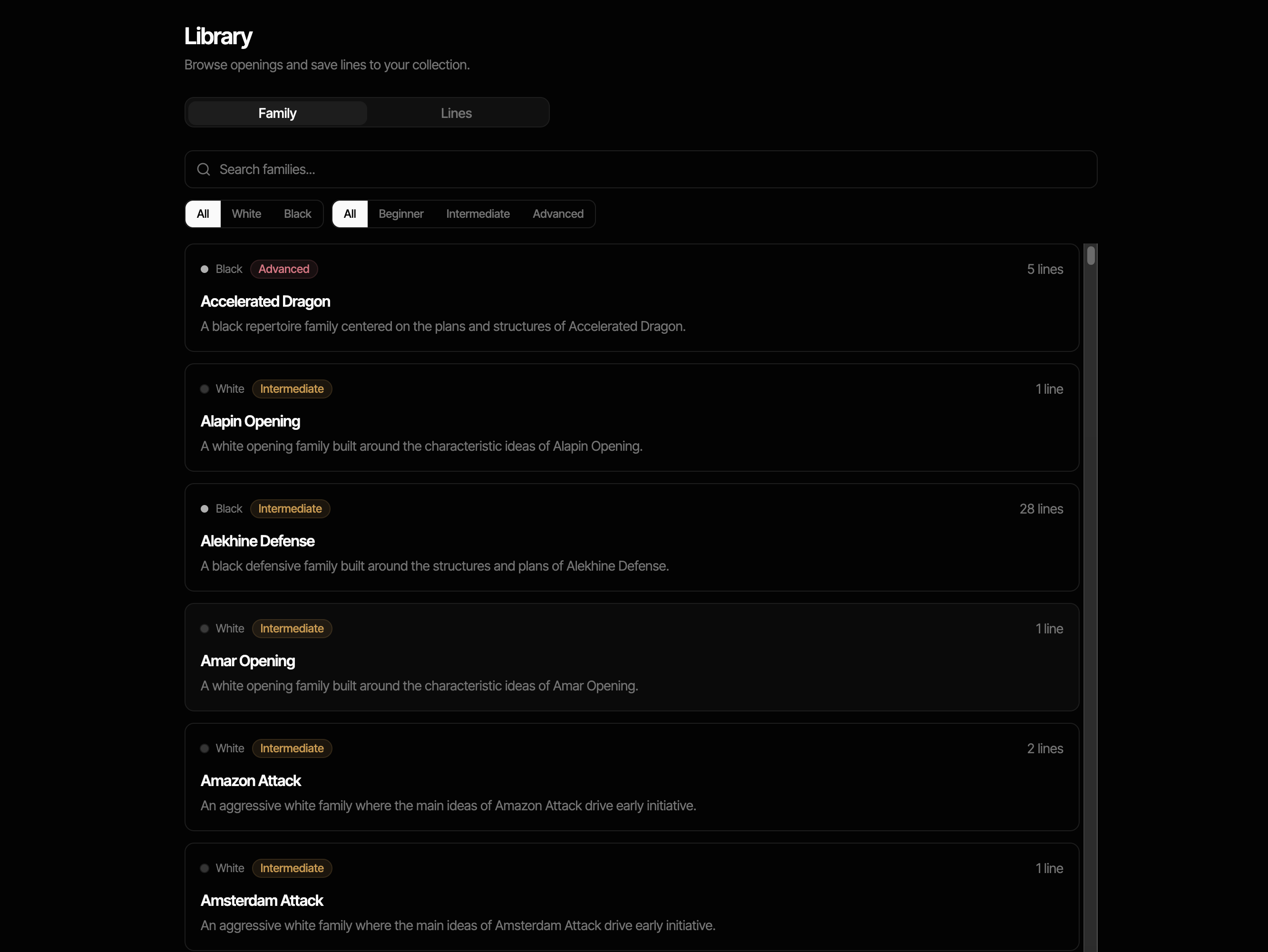
Lichess imports
Import your own Lichess studies for free and turn them into the same board-first review loop.
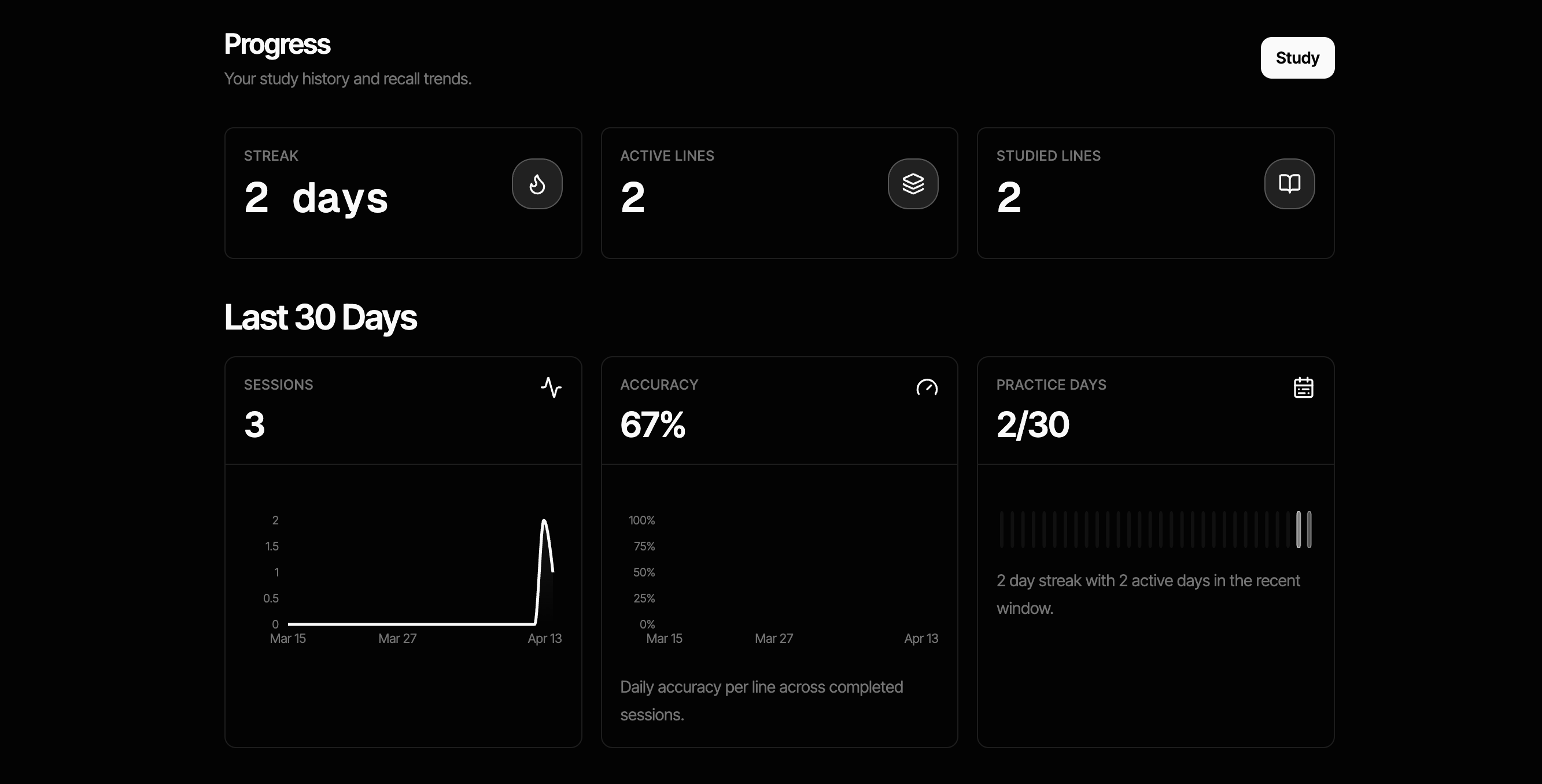
Ready reviews
Accuracy, streaks, and review history keep the queue grounded in what happened on the board.
FAQ
The short version: use ChessEcho when you want active recall from real positions, not another place to collect opening notes.
A chess opening trainer is a tool for turning opening study into repeatable recall. The useful version does more than show lines: it asks you to find the next move from a position and tracks whether the line is sticking.
Keep the repertoire narrow, drill from real board positions, and start with the lines that are ready for another pass. The goal is practical recall, not collecting every possible sideline.
Yes. Importing your own Lichess studies is included on the free plan (up to 10 studies, or 100 on Premium), so your existing study material can become part of the same board-first training loop.
Yes, as long as the player wants a concrete repertoire. Beginners can keep a small queue; stronger players can use imports and progress data to manage more lines.
Start free, import your own Lichess studies, build a small review queue, and upgrade only when you want unlimited active lines and progress analytics.